Engineering Support for Hospitality Bathroom Systems
Hospitality bathrooms require more than visually coordinated fixtures. Their plumbing systems must support repeatable guest comfort, controlled water use, reliable temperature performance, manageable service access, and compatibility with the building’s domestic water infrastructure. The plumbing engineer must evaluate each fixture as part of a complete hydraulic and operational system rather than as an isolated decorative component.
Guestrooms, suites, spas, public restrooms, wellness areas, and branded residences may each operate under different demand patterns. A rainfall shower may require a different available flow rate than a lavatory faucet. A thermostatic valve may require balanced hot and cold supply conditions. A wall-mounted faucet may require precise rough-in coordination with stone, tile, waterproofing, cabinetry, and concealed piping.
This resource organizes the principal engineering questions that should be addressed before final fixture approval, including pressure, flow, valve selection, pipe connections, temperature control, accessibility, maintenance, water efficiency, installation tolerances, and commissioning.
Core Engineering Review Categories
Each fixture schedule should be reviewed against the following project-specific engineering conditions before procurement or release for construction.
01
Operating Pressure
Static and residual pressure available at the fixture during realistic peak-demand conditions.
02
Flow Demand
Fixture flow characteristics, simultaneous-use assumptions, and branch-piping capacity.
03
Temperature Control
Mixing technology, hot-water delivery, scald protection, recirculation, and balancing.
04
Connection Interface
Connection sizes, adapters, rough-in depths, mounting surfaces, and supply orientation.
05
Service Access
Access to valves, cartridges, filters, solenoids, transformers, hoses, and isolation points.
06
System Compatibility
Compatibility with building pressure zones, water quality, hot-water systems, and controls.
Static Pressure Versus Residual Pressure
Static pressure is measured when water is not flowing. Residual or dynamic pressure is measured while one or more fixtures are operating. A fixture may appear adequately supplied under static conditions but experience weak performance when simultaneous demand lowers the pressure within the branch.
Engineering review should therefore consider the pressure available during morning peak use, housekeeping activity, spa operation, laundry demand, irrigation demand, and other conditions that may affect the domestic water system.
Pressure Review Checklist
- Confirm design pressure at the fixture elevation.
- Account for vertical head loss in high-rise buildings.
- Include friction loss through piping, valves, filters, and fittings.
- Check the effect of pressure-reducing valves and booster systems.
- Verify hot and cold pressure balance at mixing devices.
- Evaluate pressure at the hydraulically remote fixture.
|
Engineering Condition
|
Potential Effect
|
Recommended Review
|
|
Low residual pressure
|
Reduced spray coverage, slow tub filling, or inconsistent shower experience
|
Review branch sizing, elevation, booster capacity, and simultaneous demand
|
|
Excessive static pressure
|
Noise, accelerated component wear, difficult balancing, or increased water use
|
Coordinate pressure regulation and verify downstream pressure zones
|
|
Unequal hot and cold pressure
|
Unstable outlet temperature or reduced mixed-water flow
|
Evaluate balancing, check valves, recirculation, and supply routing
|
|
Rapid pressure fluctuation
|
Temperature changes and inconsistent shower discharge
|
Assess pressure-balancing or thermostatic control strategy
|
Flow Characteristics and Demand Planning
Published fixture flow values should be interpreted together with actual pressure, outlet configuration, and control settings. Multi-outlet shower systems may operate one function at a time or may permit simultaneous operation. That distinction can substantially change the required branch-pipe capacity and hot-water demand.
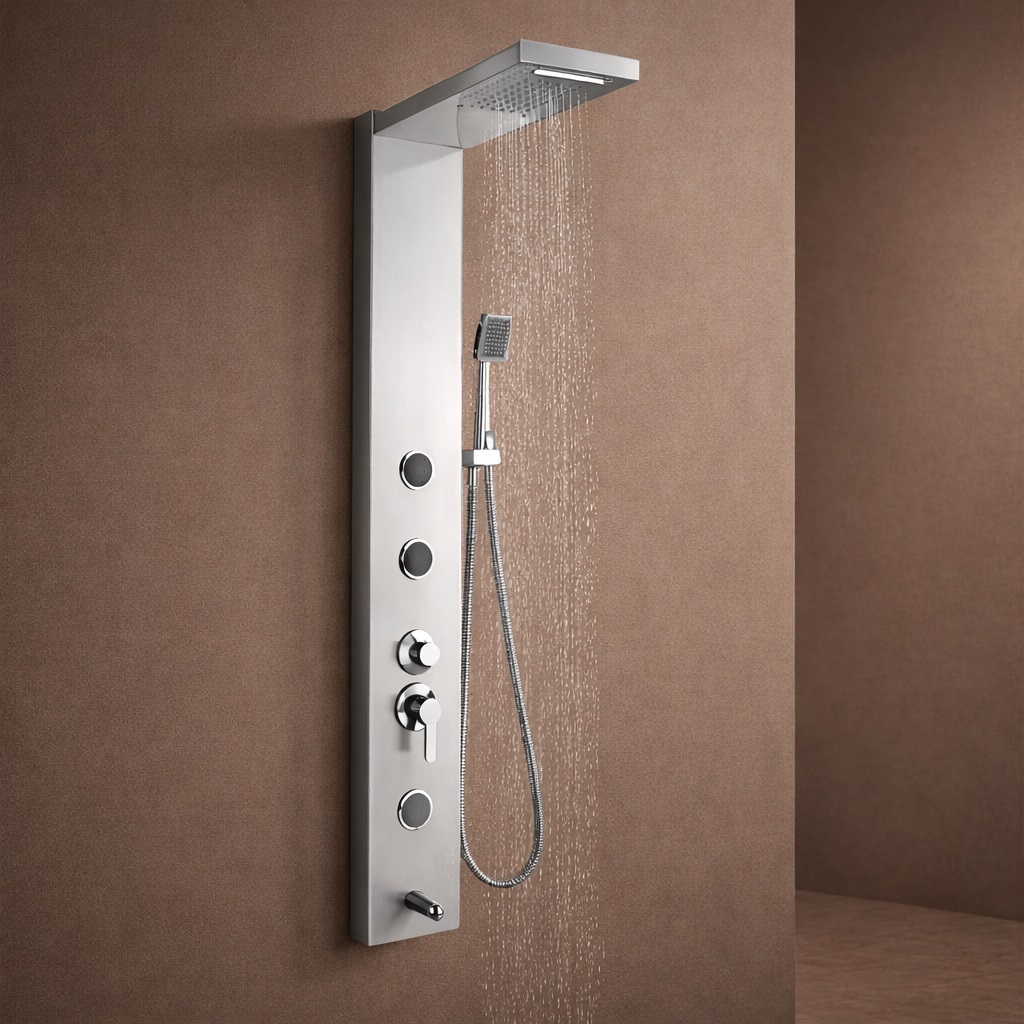
The engineer should confirm whether the intended user experience includes a rainfall outlet, hand shower, body sprays, waterfall outlet, tub filler, or multiple active functions. Diverter logic, valve capacity, and outlet restrictions must support the expected operating combination.
For guestrooms, design assumptions should also account for fixture diversity across occupied rooms. For spas and wellness areas, simultaneous-use assumptions may be higher and may require dedicated zones, larger distribution piping, or greater hot-water recovery capacity.
Lavatory Faucets
Review aerator type, intended flow control, bowl geometry, splash containment, and pressure compensation.
Rainfall Showers
Confirm available flow, outlet diameter, spray distribution, ceiling support, and drainage capacity.
Body Sprays
Evaluate combined demand, pressure equalization, spray alignment, and valve sequencing.
Tub Fillers
Coordinate fill time, tub volume, hot-water capacity, overflow protection, and floor or deck access.
Valve Technologies for Hospitality Applications
Valve selection affects temperature stability, guest operation, serviceability, flow capacity, and commissioning. The appropriate technology depends on fixture type, project expectations, local plumbing requirements, available pressure, and the level of control required.
Engineering Principle
A decorative trim set should not be approved until the concealed valve body, flow capacity, rough-in depth, access strategy, and outlet configuration have been verified.
Thermostatic Mixing Valves
Thermostatic valves regulate mixed-water temperature by responding to changes in incoming hot or cold conditions. They are commonly considered for premium shower systems where stable temperature and independent flow control are desired.
Pressure-Balancing Valves
Pressure-balancing valves respond to pressure changes between the hot and cold supplies. They can help reduce abrupt temperature changes caused by simultaneous fixture use elsewhere in the system.
Diverter and Transfer Valves
Diverter valves direct water between shower outlets. The engineer should confirm whether the device supports single-function or shared-function operation and whether its internal flow capacity is appropriate for the selected outlets.
Valve Submittal Review
- Minimum and maximum operating pressure
- Maximum flow capacity
- Hot and cold inlet orientation
- Rough-in depth tolerance
- Required service clearance
- Integral check valves or filters
- Cartridge replacement procedure
- Compatible trim and outlet combinations
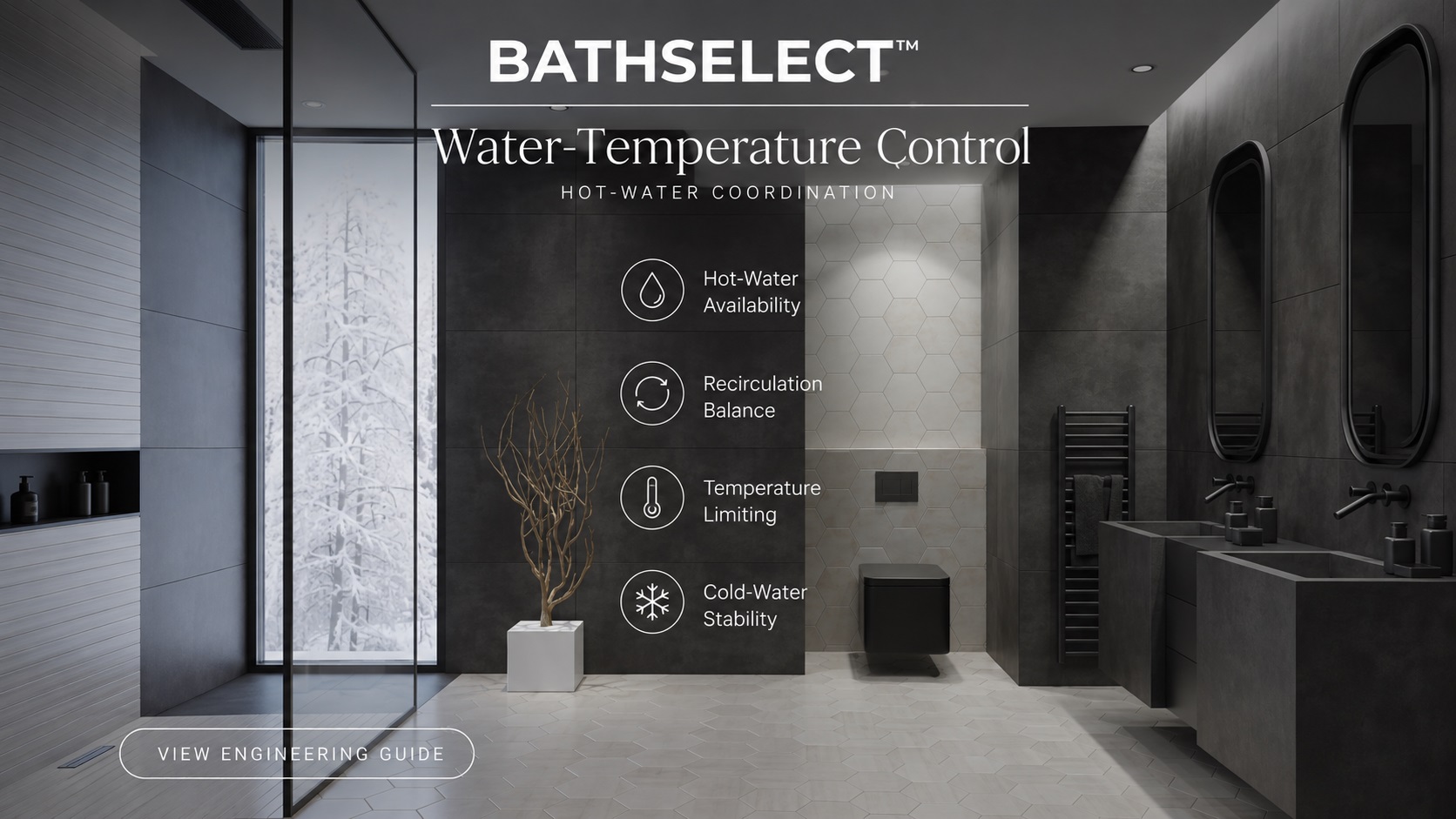
Hot-Water Availability
Confirm the supply temperature and recovery capacity available during peak occupancy, spa operation, housekeeping demand, and other high-load conditions.
Recirculation Balance
Long branches and poorly balanced return systems can increase wait time, water waste, and guest complaints regarding delayed hot-water delivery.
Temperature Limiting
Set maximum outlet temperatures during commissioning and document the required adjustment procedure for facilities personnel.
Cold-Water Stability
Cold-water temperature and pressure may vary seasonally or during simultaneous demand, affecting mixed-water performance.
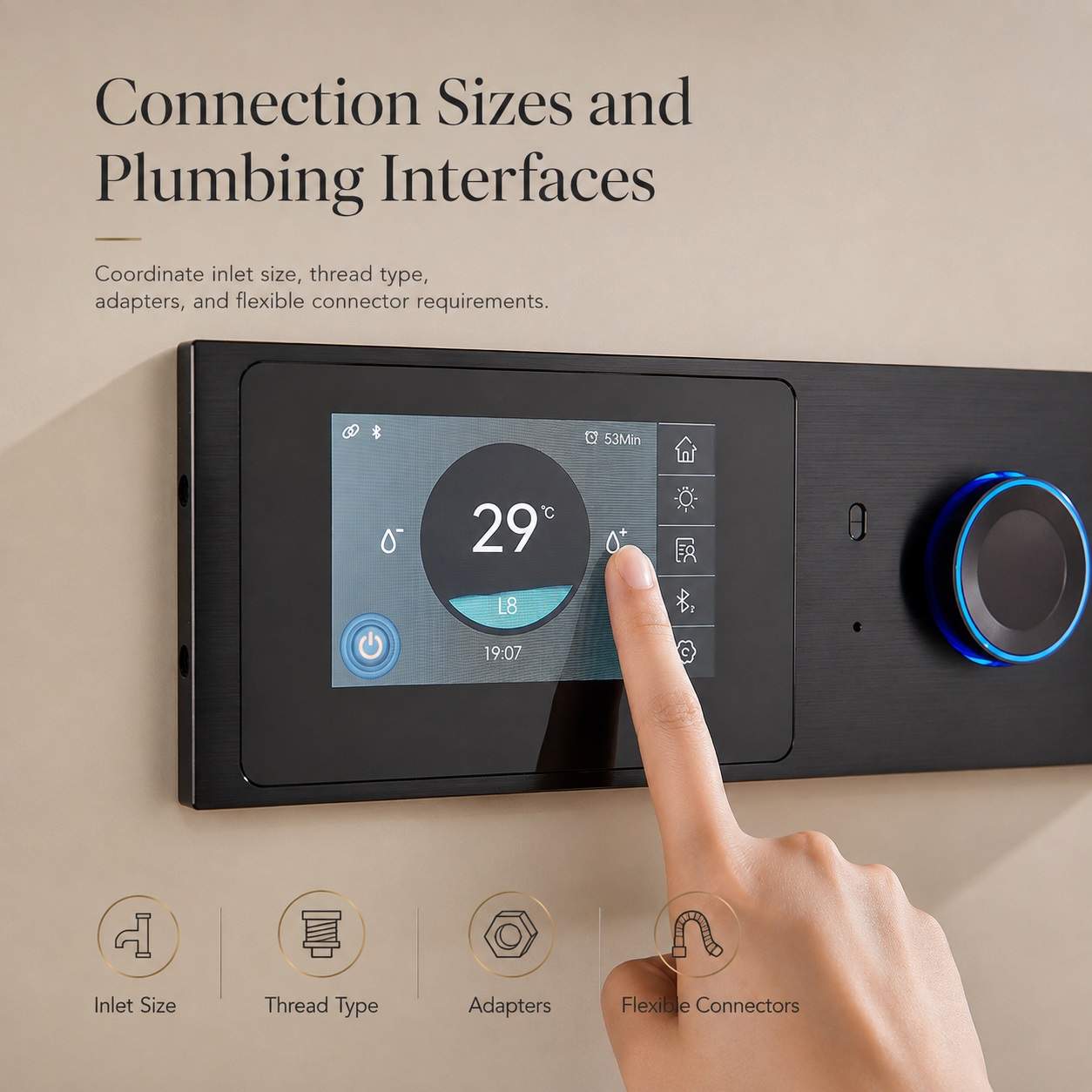
Connection Sizes and Plumbing Interfaces
Fixture connection sizes must be coordinated with project piping, local material practices, accessible isolation valves, and approved adapters. Connection notation alone may not establish thread compatibility, sealing method, or required transition fittings.
The plumbing submittal should identify the fixture inlet size, thread type, hose connection, valve-body connection, and outlet connection. Imported or specialized fixtures may require project-specific adapters, which should be identified before procurement.
Where flexible connectors are used, verify pressure rating, temperature rating, bend radius, accessibility, replacement path, and compatibility with the building’s water-quality conditions.
Connection Coordination Checklist
Fixture inlet connection size
Thread or compression standard
Adapter and reducer requirements
Required isolation valves
Flexible hose length and rating
Hot and cold inlet orientation
Wall, deck, floor, or ceiling support
Finished-surface penetration size
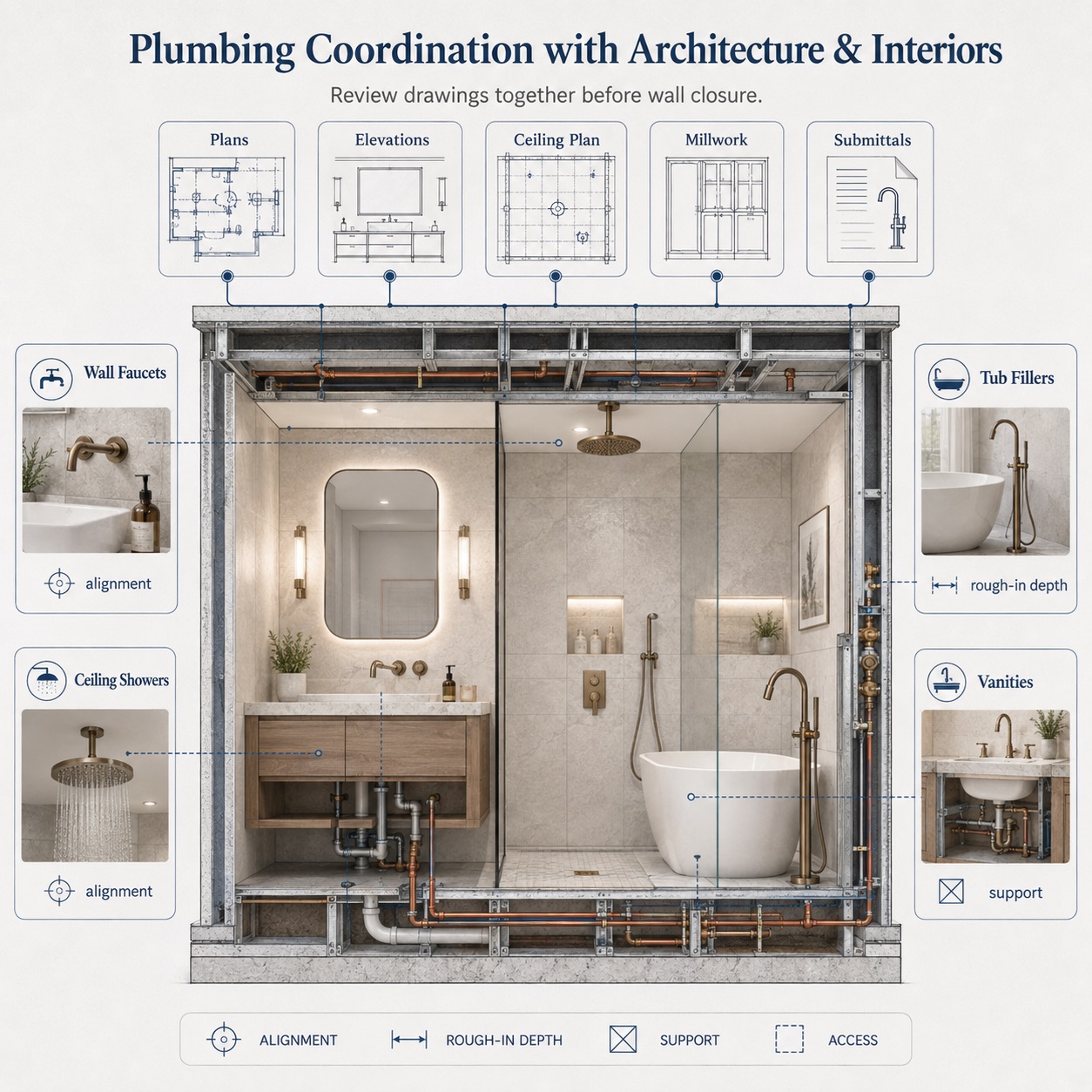
Wall-mounted faucets require exact alignment between the valve body, finished-wall thickness, spout projection, basin position, and backsplash geometry. Ceiling-mounted shower outlets require structural support, accurate centerlines, and coordination with lighting, sprinklers, diffusers, access panels, and waterproofing.
Concealed valves must be positioned within their permitted rough-in depth after accounting for substrate, waterproofing membrane, mortar bed, tile, stone, decorative panels, and installation tolerances. The final trim must seat correctly without leaving gaps or restricting handle movement.
Plumbing drawings, interior elevations, millwork drawings, reflected ceiling plans, and fixture submittals should therefore be reviewed together before fabrication or wall closure.
Wall-Mounted Faucets
Verify spout centerline, projection, outlet height, basin setback, finished-wall depth, and access to concealed connections.
Ceiling Shower Outlets
Coordinate blocking, branch piping, ceiling elevation, service access, waterproofing, and adjacent building systems.
Freestanding Tub Fillers
Coordinate floor reinforcement, waterproofing, piping sleeves, tub clearance, service access, and final alignment.
Vanity Installations
Confirm sink-hole drilling, faucet spread, countertop thickness, drain clearance, supply routing, and cabinet access.
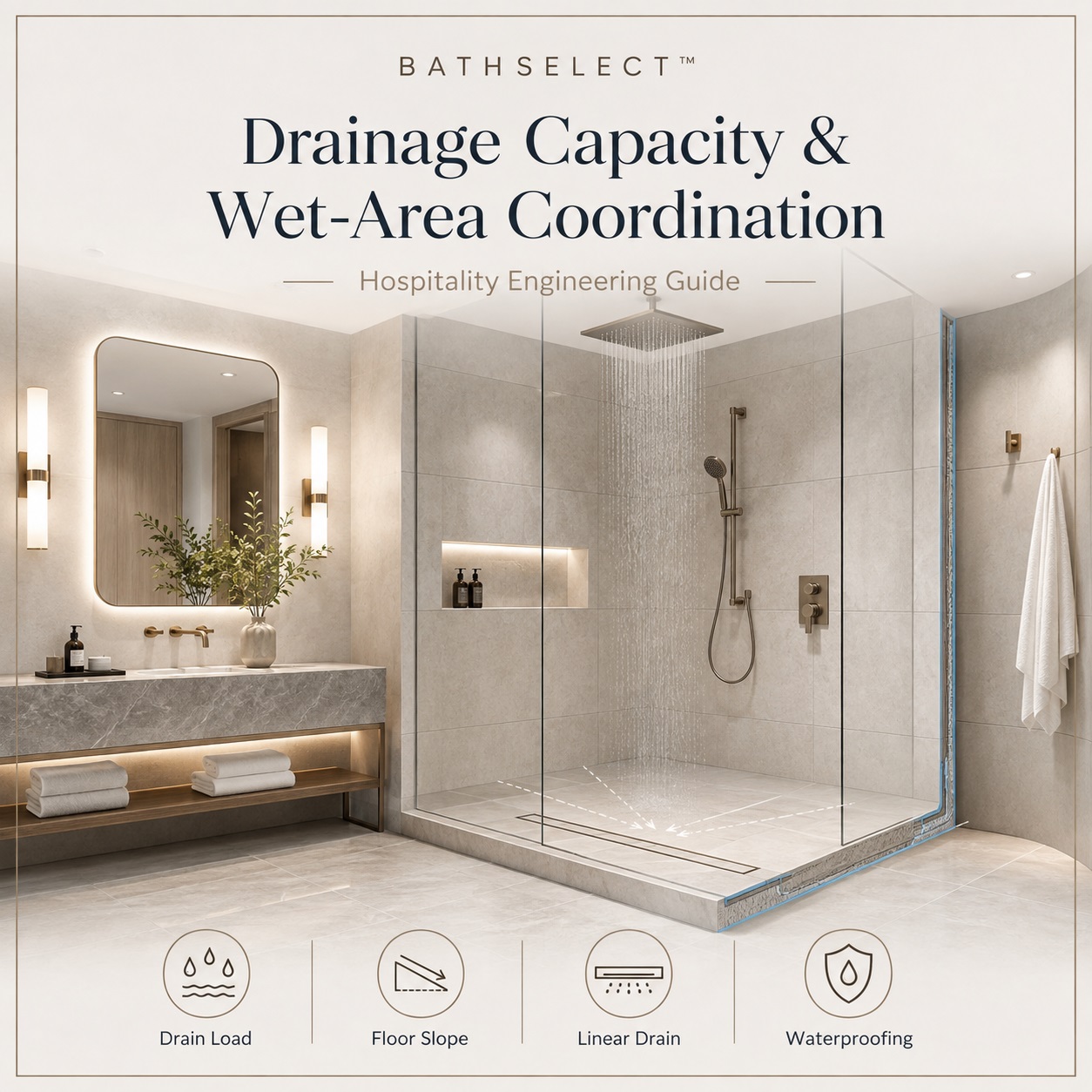
Drainage Capacity and Wet-Area Coordination
Shower drainage should be sized for the maximum simultaneous discharge permitted by the selected valve and outlet system. A large rainfall outlet combined with body sprays or a hand shower can produce a substantially different drainage load than a single low-flow outlet.
The engineering review should include drain capacity, trap and branch sizing, floor slope, waterproofing transitions, threshold design, linear-drain placement, and the potential for water migration beyond the intended wet zone.
The finished drain elevation must align with tile thickness, setting material, waterproofing, and required slope. Drain location should also support practical maintenance and cleaning without conflicting with structural elements or floor penetrations.
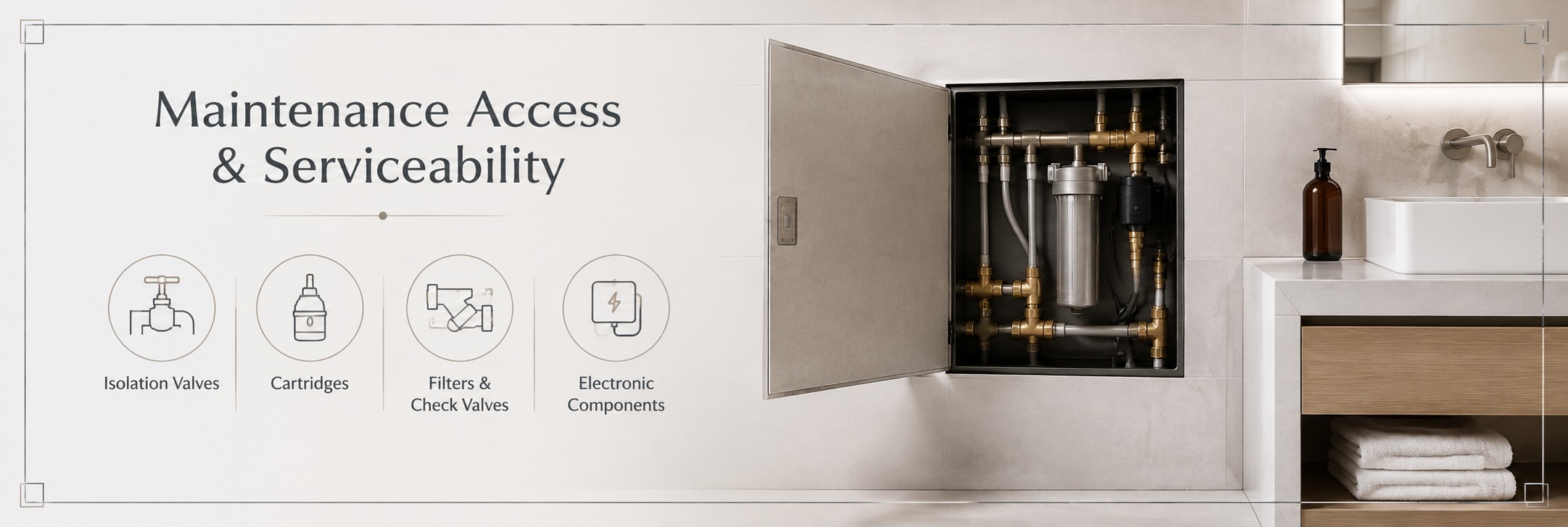
Maintenance Access and Lifecycle Serviceability
A hospitality fixture is only fully coordinated when facilities personnel can inspect and service its concealed components without destructive access.
Isolation Valves
Provide accessible shutoff points that permit fixture service without disrupting an entire guestroom stack or pressure zone.
Cartridges
Confirm removal clearance, trim disassembly procedure, replacement direction, and access after finish installation.
Filters and Check Valves
Position strainers, filters, and check components where they can be cleaned or replaced without removing stone or cabinetry.
Electronic Components
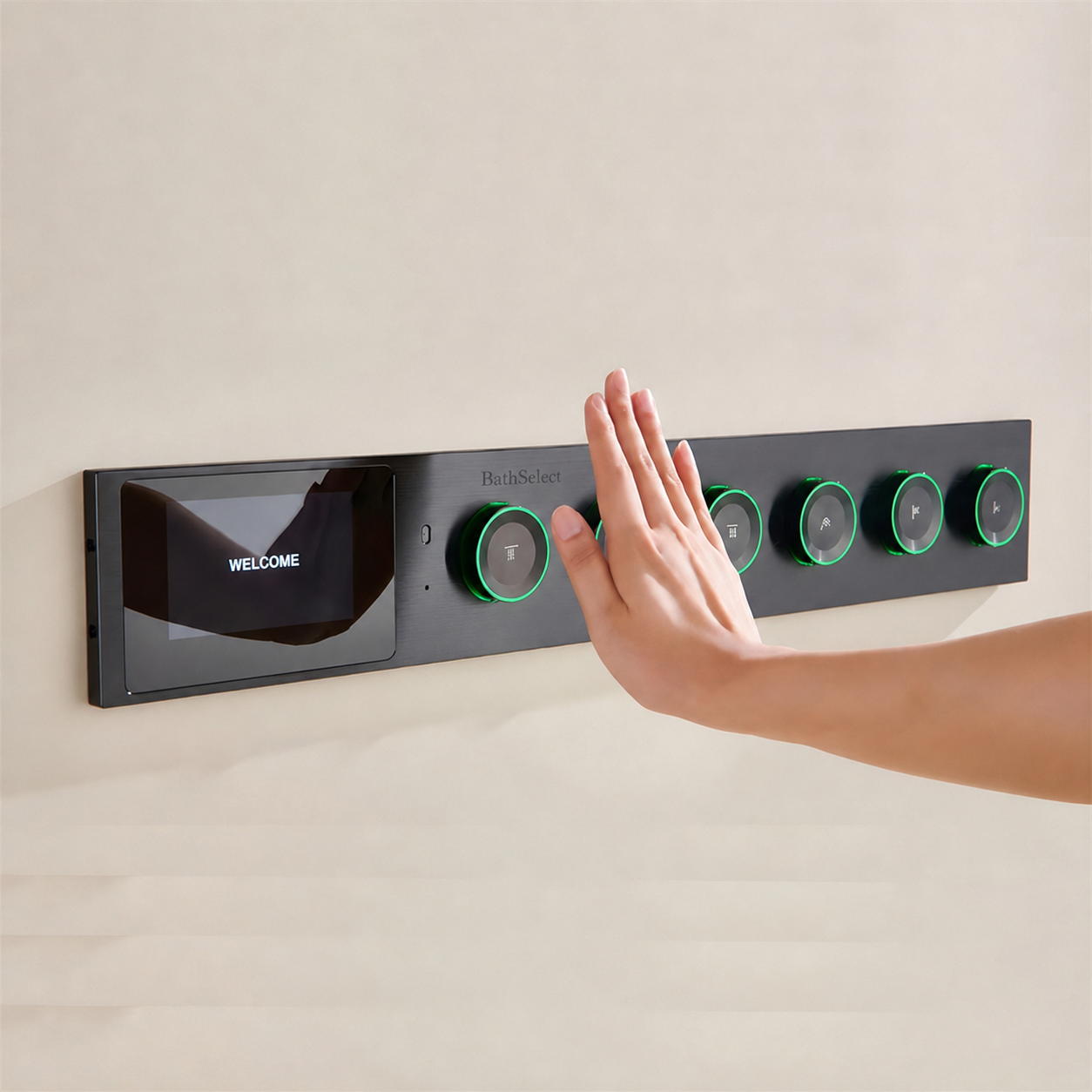
For sensor fixtures, coordinate access to solenoids, batteries, transformers, controllers, cables, and power supplies.
Recommended Access Documentation
Construction documents should identify required access panels, cabinet clearances, ceiling access, removable trim components, valve locations, electrical service points, and isolation-valve positions. The operations and maintenance package should include exploded views, replacement-part references, adjustment instructions, and commissioning settings.
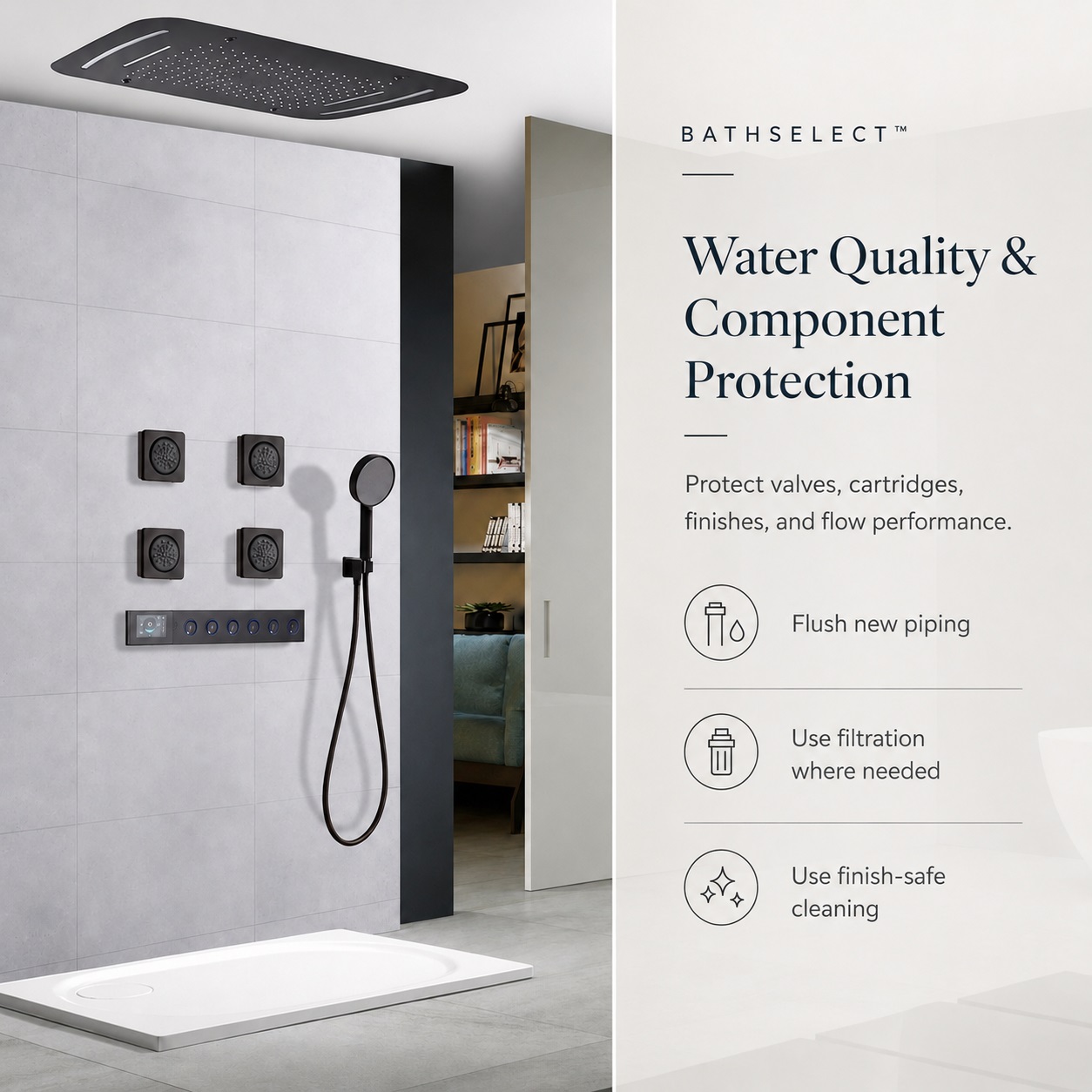
Water Quality and Component Protection
Water quality can influence valves, cartridges, aerators, spray outlets, finishes, check valves, filters, and flexible connections. Sediment, scale, construction debris, and aggressive water chemistry may reduce performance or shorten service intervals.
New piping should be thoroughly flushed before fixture cartridges, thermostatic elements, aerators, and spray outlets are placed into service. Where project conditions warrant, the engineer should evaluate filtration, strainers, scale-management measures, or other treatment strategies.
The operations team should receive cleaning guidance appropriate to the fixture finish and component materials. Abrasive pads, harsh chemicals, and incompatible cleaners may damage decorative surfaces or seals even when the underlying plumbing system remains functional.
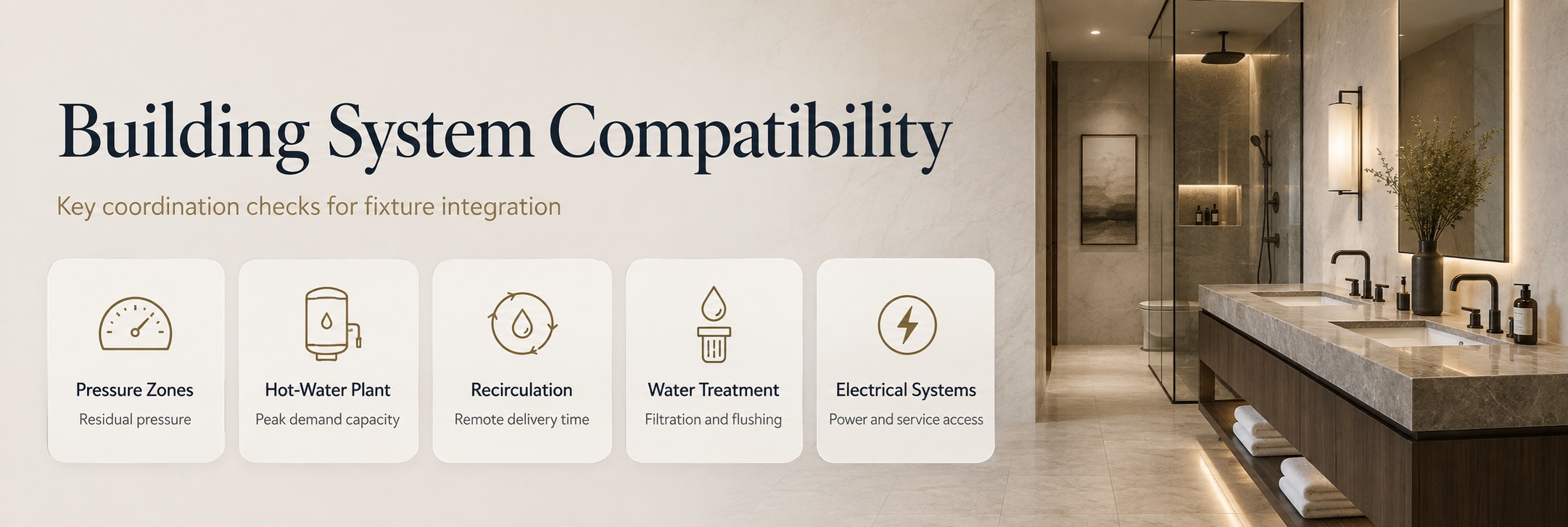
Each fixture must be compatible with the broader domestic-water system, not only with its immediate supply connection.
|
Building System
|
Compatibility Question
|
Coordination Action
|
|
Pressure zones
|
Will the fixture operate correctly at the highest and lowest expected zone pressures?
|
Confirm residual pressure and pressure-regulation strategy.
|
|
Hot-water plant
|
Can the plant support peak mixed-water demand and expected recovery?
|
Model peak demand and verify storage or generation capacity.
|
|
Recirculation
|
Will hot water reach remote guestrooms within the project’s performance target?
|
Balance recirculation and limit excessive branch volume.
|
|
Water treatment
|
Could sediment, hardness, or water chemistry affect fixture components?
|
Coordinate filtration, flushing, treatment, and maintenance intervals.
|
|
Electrical systems
|
Do electronic fixtures have compatible power, controls, and accessible service points?
|
Coordinate transformers, outlets, controls, cable paths, and backup power where required.
|
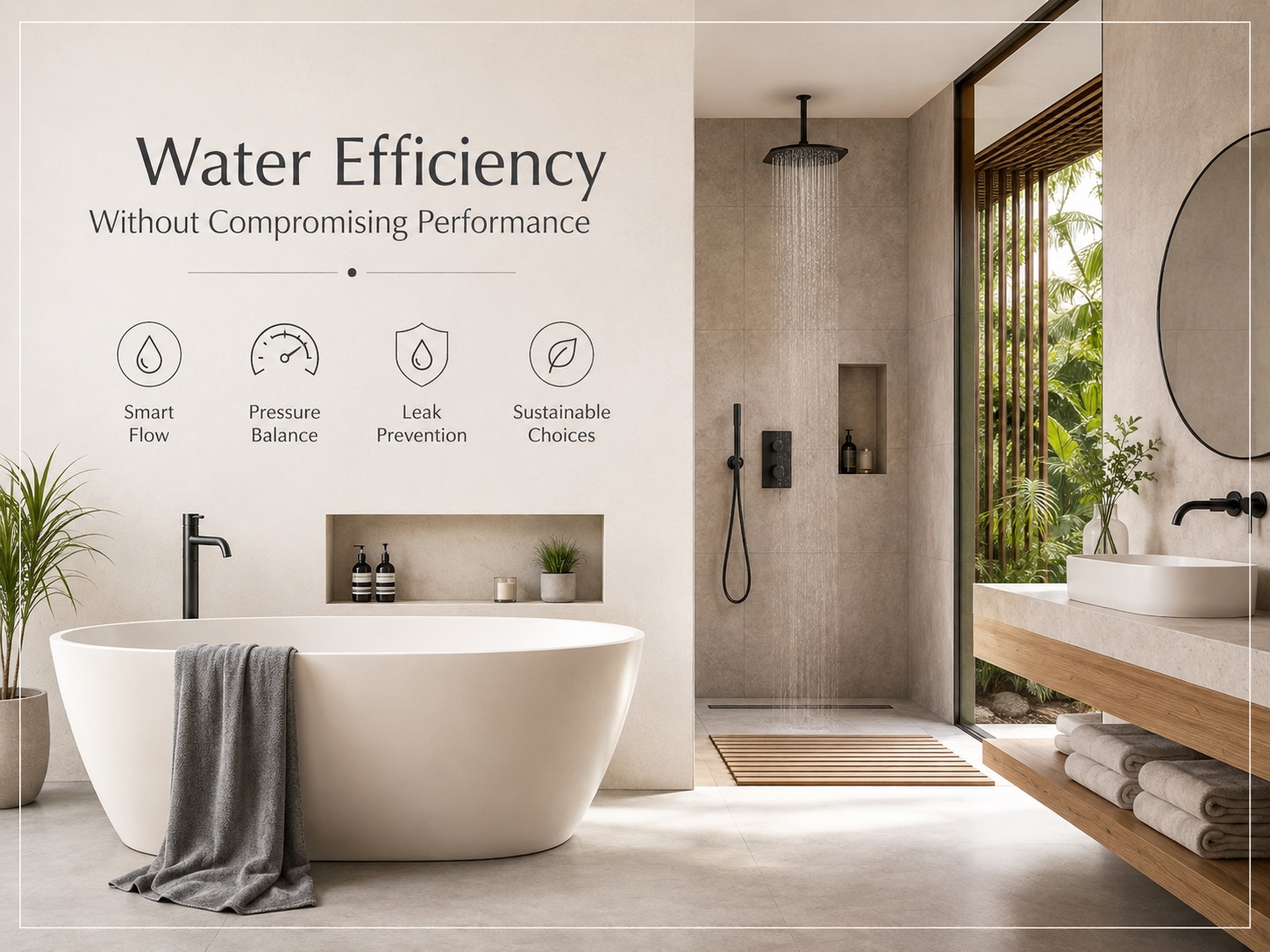
Water Efficiency Without Compromising Performance
Hospitality water-efficiency strategies should evaluate total water use rather than relying only on individual fixture flow ratings. Effective conservation includes pressure management, rapid hot-water delivery, leak prevention, reliable shutoff, appropriate aeration, guest-friendly controls, and maintenance practices that preserve intended performance.
Reducing flow without considering outlet geometry can produce weak spray coverage, longer use duration, delayed rinsing, or guest dissatisfaction. The engineer and design team should select outlets that provide the intended experience at the project’s available pressure and required efficiency level.
For large properties, fixture schedules should support water-use modeling by clearly identifying flow rates, flush volumes, anticipated occupancy, and operating patterns for guestrooms, public restrooms, restaurants, spas, pools, and staff areas.
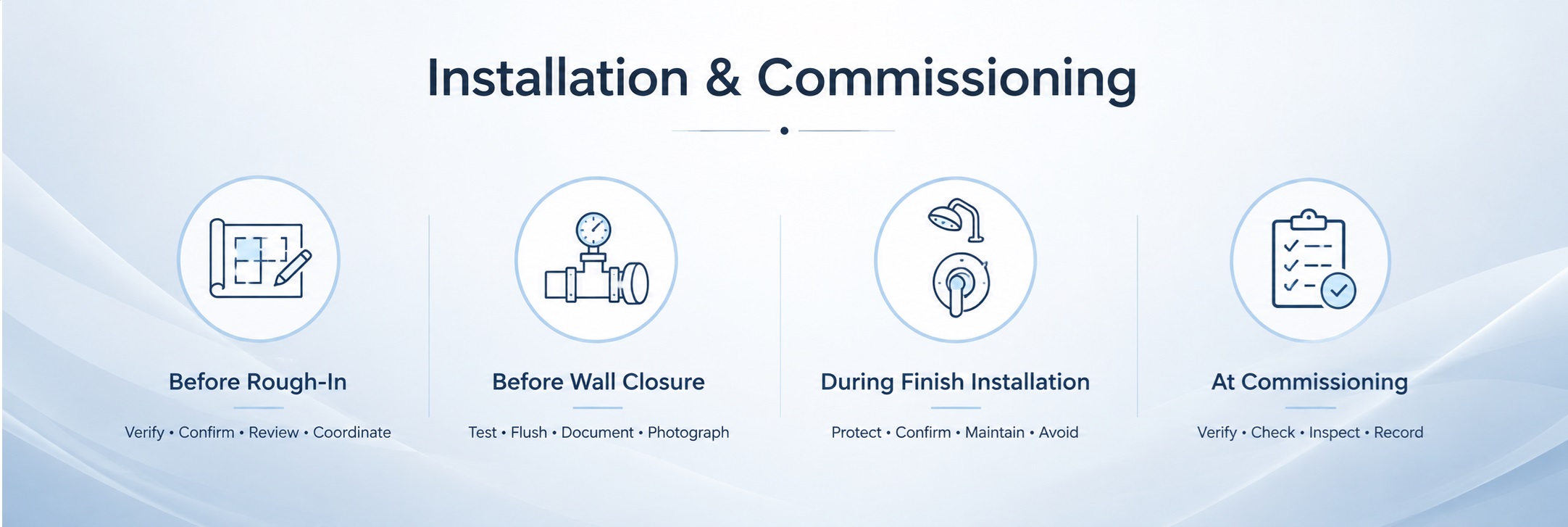
Before Rough-In
- Verify approved fixture and valve models.
- Confirm centerlines and finished elevations.
- Review connection standards and adapters.
- Coordinate required backing and structural support.
Before Wall Closure
- Pressure-test piping and concealed valve bodies.
- Flush construction debris from the system.
- Document rough-in depth and orientation.
- Photograph concealed conditions and access points.
During Finish Installation
- Protect fixture finishes from damage.
- Confirm trim fit against finished surfaces.
- Maintain access to serviceable components.
- Avoid sealants or adhesives that obstruct removal.
At Commissioning
- Verify flow and temperature performance.
- Check diverter and outlet operation.
- Inspect for leaks, noise, and vibration.
- Record final settings and service instructions.
Commissioning and Performance Verification
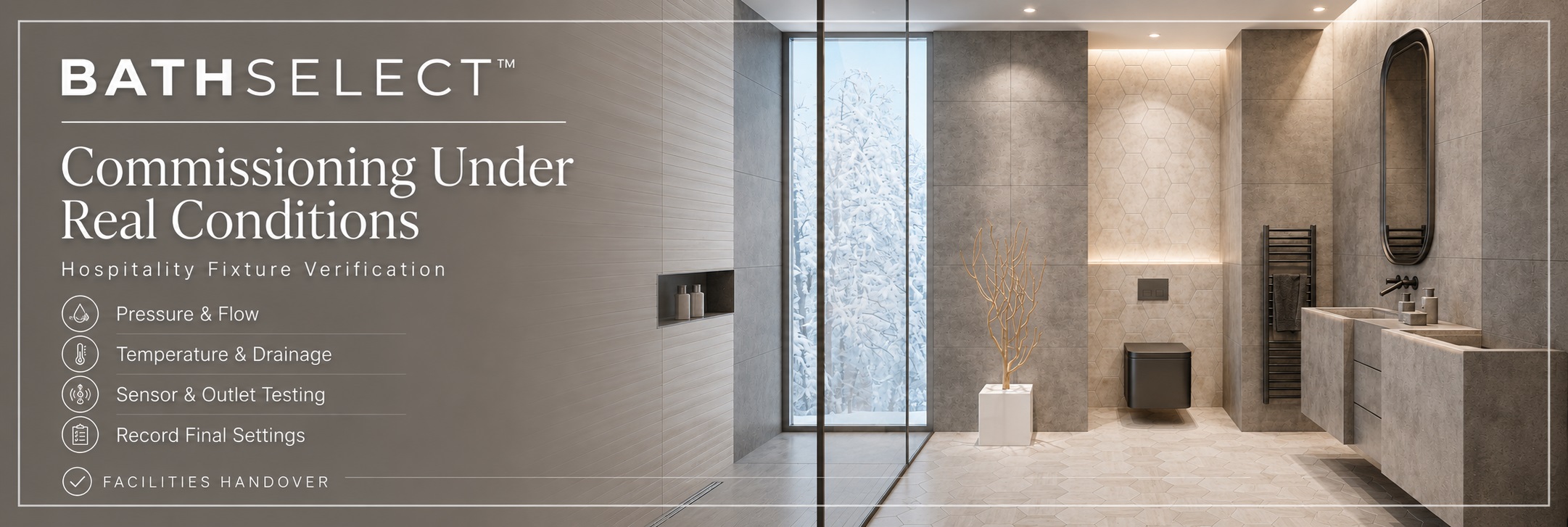
Commissioning should confirm that installed fixtures perform under actual building conditions. Visual completion alone does not demonstrate correct pressure, flow, temperature, drainage, sensor operation, or outlet sequencing.
Testing should include representative guestrooms at different elevations and distances from the water source. For high-rise properties, verification should include fixtures within multiple pressure zones. For large shower systems, test each permitted outlet combination.
Final settings, temperature limits, sensor ranges, control configurations, and maintenance instructions should be documented for the owner’s facilities team.
|
Commissioning Test
|
Verification Objective
|
|
Static and flowing pressure
|
Confirm pressure remains within the fixture’s intended operating range.
|
|
Outlet flow and spray pattern
|
Verify complete spray coverage and acceptable performance.
|
|
Mixed-water temperature
|
Confirm stable temperature and maximum-temperature settings.
|
|
Diverter operation
|
Confirm correct outlet selection and permitted simultaneous functions.
|
|
Drainage performance
|
Verify drainage accommodates maximum intended discharge.
|
|
Leak and service inspection
|
Confirm accessible connections remain dry and serviceable.
|
Technical Data Sheets
Flow, pressure, temperature, connection, material, finish, dimensional, and power information.
Rough-In Drawings
Valve locations, centerlines, mounting dimensions, wall depths, supports, and access requirements.
Installation Instructions
Sequencing, testing, flushing, assembly, sealing, adjustment, and finish-protection requirements.
Maintenance Information
Cartridge replacement, filter cleaning, finish care, troubleshooting, and spare-parts references.
Coordination Drawings
Integration with architecture, interiors, millwork, waterproofing, structure, electrical, and drainage.
Commissioning Records
Pressure readings, flow observations, temperature settings, control configuration, and final approvals.
The following questions help identify unresolved plumbing risks before procurement, fabrication, or construction.
What residual pressure will be available at the fixture during peak demand?
Which shower outlets may operate simultaneously, and what is their combined flow?
Is the concealed valve compatible with the finished-wall thickness and construction tolerance?
Can all serviceable components be reached without removing permanent finishes?
Are connection standards and required adapters clearly identified?
Can the hot-water plant and recirculation system support the intended guest experience?
Has commissioning responsibility been assigned and documented?
Different hospitality environments create different hydraulic, maintenance, accessibility, and operational priorities.
Guestrooms and Suites
Prioritize quiet operation, rapid hot-water delivery, repeatable shower performance, accessible isolation, and protection against leaks within occupied spaces.
Luxury Spas
Evaluate high simultaneous demand, specialty outlets, treatment rooms, drainage capacity, temperature stability, and frequent cleaning cycles.
Public Restrooms
Emphasize water efficiency, sensor reliability, vandal resistance, accessible maintenance, power coordination, and high-use durability.
Branded Residences
Coordinate residential ownership expectations with hospitality-level finish consistency, service documentation, and replacement-part planning.
Presidential and Specialty Suites
Review multi-outlet showers, large tubs, specialty controls, elevated water demand, acoustic requirements, and concealed service pathways.
Restaurants and Club Areas
Plan for concentrated peak use, accessible sensor components, rapid maintenance, coordinated finishes, and reliable pressure during event periods.

Engineering Hospitality Bathrooms as Complete Systems
A successful hospitality bathroom installation depends on the coordinated performance of the fixture, valve, piping, hot-water system, pressure zone, drainage, finished surfaces, electrical controls, and maintenance infrastructure.
By resolving pressure, flow, connection, temperature, access, compatibility, efficiency, and commissioning requirements before construction, plumbing engineers can help protect design intent while reducing field conflicts, service disruptions, guest complaints, and lifecycle operating risk.
Coordinate Your Hospitality Fixture Specification
Use BathSelect Hospitality technical resources to coordinate fixture selections with architectural plans, plumbing calculations, rough-in conditions, installation requirements, and long-term maintenance objectives.
Replace the temporary “0000” links with the final Volusion category URLs after those pages are created.
|
|
Engineer Coordinated Hospitality Plumbing Systems
BathSelect Hospitality® plumbing engineer resources support the technical coordination of luxury hotel guestrooms, suites, spas, branded residences, and public washrooms. Plumbing consultants, MEP engineers, architects, contractors, and specification teams can evaluate fixture flow requirements, operating pressure, water-supply connections, valve configurations, drainage coordination, rough-in dimensions, service access, and installation sequencing before construction. Begin with the
Hospitality Specification Center, coordinate requirements through the
master specifications, and review editable
CSI bathroom fixture specifications. Engineering teams can also verify product configurations through
product submittal packages and coordinate approved selections with the
thermostatic shower system series.
Engineering Guides →
Shower Systems →
|
|
|